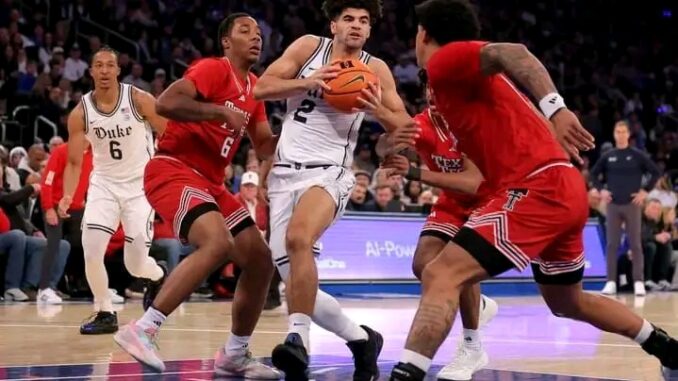
“One Night at the Garden Changed Everything: How Duke’s Unbeaten Dream Collapsed Under the Brightest Lights”…Read More….
Madison Square Garden has a way of exposing truth. Legends are crowned there, illusions are shattered there, and on one unforgettable night, Duke’s perfect season met its abrupt and sobering end beneath the iconic lights of the world’s most famous arena.
Duke arrived in New York unbeaten, confident, and carrying the quiet swagger of a team that had mastered close games, late runs, and hostile environments. Forty minutes later, they walked out stunned—no longer perfect, no longer untouchable, and suddenly the center of a much bigger conversation sweeping across college basketball.
The final score told part of the story. The box score explained another piece. But the real reasons Duke fell were hidden in the margins—the possessions no one replayed, the decisions that slipped by unnoticed, and the moments that didn’t make the highlight reels.
From the opening tip, the game felt tense rather than dominant. Duke never truly settled into its rhythm. Shots that usually fell rimmed out. Defensive rotations arrived a split second late. Passes were sharp but not decisive. Against a hungry opponent that sensed vulnerability early, Duke played not to lose instead of playing to impose its will.
The turning point didn’t come with a thunderous dunk or a buzzer-beater. It came quietly—missed free throws during a critical stretch, a defensive switch miscommunicated, a rushed possession when patience would have sufficed. One shot. One stop. One moment. At Madison Square Garden, that’s often all it takes.
Perhaps most telling was Duke’s body language down the stretch. For a team that had thrived in pressure moments all season, the composure cracked. The bench grew restless. The offense stalled into isolation plays. The defense, once suffocating, became reactive instead of aggressive. It wasn’t panic—but it was unfamiliar.
What followed after the final horn may matter even more than the loss itself. Analysts, former players, and fans immediately began dissecting the night. Was Duke too reliant on late-game heroics? Had the rotation grown too thin? Did the unbeaten record mask flaws that elite opponents were waiting to exploit?
Jon Scheyer was measured afterward, emphasizing growth, accountability, and perspective. He reminded everyone that championships aren’t won in December—or January—but in how teams respond when adversity finally arrives. Still, the questions lingered, and they are not going away.
History suggests this loss could become a turning point rather than a downfall. Many great Duke teams—and champions across college basketball—have suffered defining defeats that sharpened focus and hardened resolve. The Garden has done this before: it humbles, then teaches.
Yet the mystique is gone. Duke is no longer chasing perfection. Instead, they are chasing answers.
Madison Square Garden delivered its verdict in just 40 minutes. Duke walked in unbeaten. They walked out shaken. And the subtle moments that decided the night may ultimately define their season—one way or another.

Leave a Reply